



This study is no longer accepting participants. The Children’s Hemiplegia and Stroke Association (CHASA) has teamed with researchers at Northwestern Medicine Feinberg School of Medicine, Department of Physical Therapy and Human Movement Sciences, to recruit participants for a research study. […]
Babies with Stroke or Bleeding in the Brain – Research Study

Understanding How the Brain Continues to Develop through Brain Imaging and Brain Stimulation The Gillick Pediatric Laboratory team is conducting research and recruiting babies between the ages of 3 and 12 months. Study details are below. More information from Dr. Sam […]
Research Seeking Participants – Children with Hemiplegia
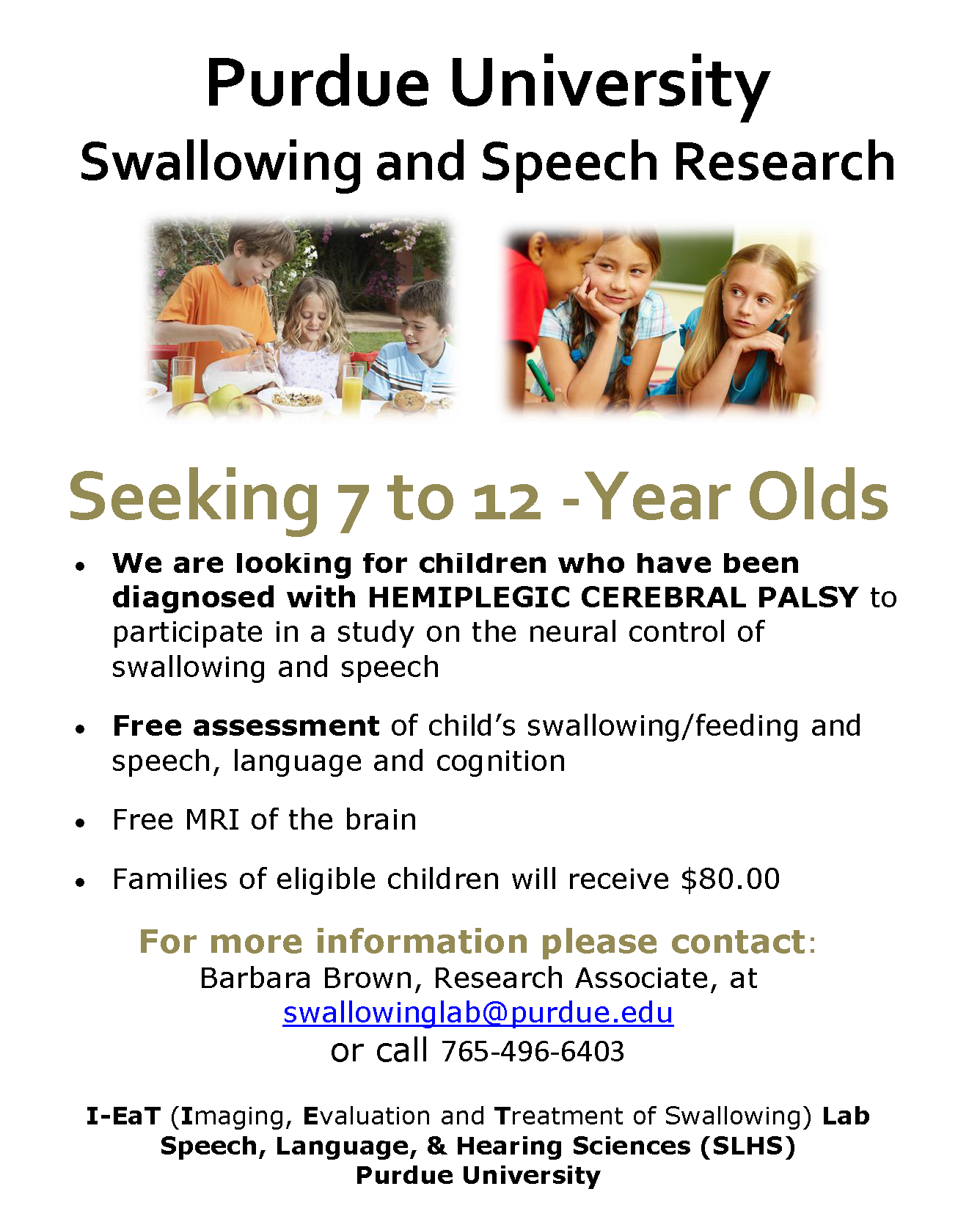
Dr. Georgia Malandraki, an Assistant Professor in the Dept. of Speech, Language, & Hearing Sciences at Purdue University is conducting a feeding and speech research program for children with CP, with the overall goal of designing better physiologically based treatments […]
Research Study: Virtual Balance Task in Children with Cerebral Palsy

Research study: How does feedback enhance learning of a virtual balance task in children with cerebral palsy? The Children’s Hemiplegia and Stroke Association has teamed with the Rehabilitation Games and Virtual Reality (ReGame-VR) laboratory at Northeastern University in Boston, MA […]
Cerebral Palsy Research Studies Seeking Participants – University of Minnesota

These studies are no longer accepting participants. Three new studies from the Gillick Pediatric Neuromodulation Lab at the University of Minnesota. Click on links below for additional information. Effects of a single session of transcranial direct current stimulation in children […]
Research Studies – Children after Stroke – Washington, DC area
The Children’s Hemiplegia and Stroke Association (CHASA) has teamed with researchers at the Center for Brain Plasticity and Recovery (CBPR) at Georgetown University Medical Center in Washington, DC to recruit participants for a research study. Researchers are studying the effects of childhood […]
Recruiting Participants – Hemiparesis and Stroke – Comparing the Location of the Motor Cortex in Children Using Two Methods: EEG and TMS
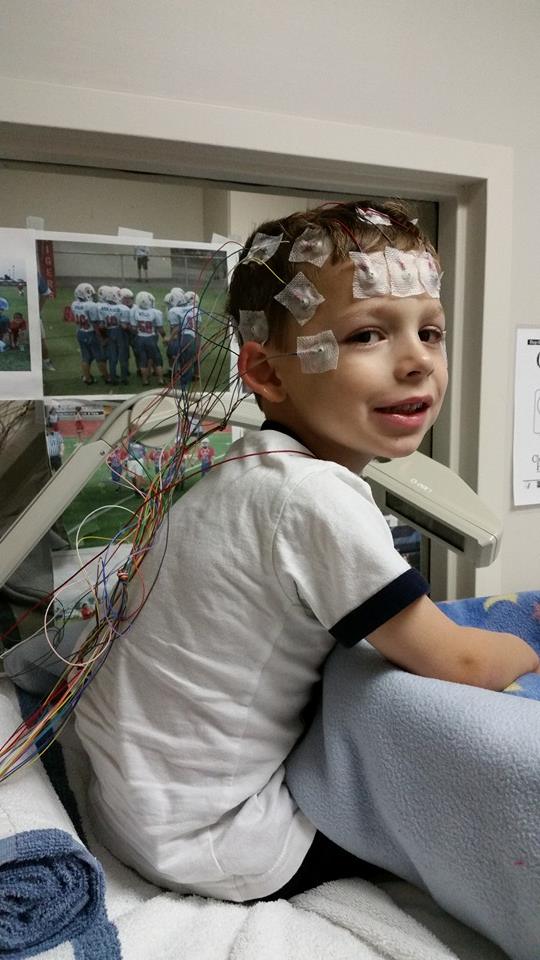
Update: 1/10/18. This study has closed and is no longer recruiting participants. The Children’s Hemiplegia and Stroke Association, CHASA, has teamed with Dr. Bernadette Gillick at the University of Minnesota to recruit participants for a research study, Comparing the Location […]
Study Recruiting Participants – The Benefits of Social Support in Families of Pediatric Stroke Survivors

Occupational therapy graduate student, Madison Drees, has requested that CHASA assist in recruiting participants for her graduate research study. The Benefits of Social Support in Families of Pediatric Stroke Survivors. Madison has provided the following description of the survey: The purpose […]
Research Study Recruiting – Combining Brain Stimulation and Therapy for Hand Function in Children with Hemiparesis
Update: 1/10/18. This study has closed and is no longer recruiting participants. The Children’s Hemiplegia and Stroke Association, CHASA, has teamed with Dr. Bernadette Gillick at the University of Minnesota to recruit participants for the Synergistic Effect of Combined tDCS/CIMT […]
Perinatal Stroke Research – Recruiting Participants for Language Project
The Children’s Hemiplegia and Stroke Association has teamed with Dr. Susan Levine at the Department of Psychology at the University of Chicago to recruit participants for a Language Development Project. Research study information from the program is below. Have you […]
Perinatal Stroke and Stroke in Children Research Studies and Clinical Trials
How to Read a Study Listed on the Clinical Trials.gov Website Pediatric Stroke Research Studies and Clinical Trials – Located in United States The following studies are listed in alphabetical order, by state. More details and contact information can be […]
Pediatric Stroke, Attention, and ADHD Research Study
The Children’s Hemiplegia and Stroke Association, CHASA, is assisting Dr. Jeffrey Max and colleagues at the University of California, San Diego and Rady Children’s Hospital with recruitment for a childhood stroke research study. Dr. Jeffrey Max and his colleagues are […]
Research Opportunity – Wellness Study for Parents
This project is now closed. A big thank you to the hundreds of participants who assisted with this very important research! The Children’s Hemiplegia and Stroke Association, CHASA, is assisting Dr. Kenda Grover and colleagues at the University of Arkansas […]
Hemiparesis Research Study Seeking Participants
CHASA is assisting Daniel McDonald, a graduate student in the Masters in Management Information Systems program at the University of Omaha in locating participants for a research study. You are being asked to be in this study because you either […]
Cerebral Palsy Research Opportunity
Researchers at the Laboratory of Neuromodulation at Spaulding Rehabilitation Network Research Institute are recruiting participants with cerebral palsy between the ages of 8 and 18 for a study. The purpose of this research is to determine whether a non-invasive technique […]
